
Robert F. Ritchie Faculty died on October 5, 2025, in Freeport, Maine.
(The following was provided by Legacy.com in October 5, 2025:)
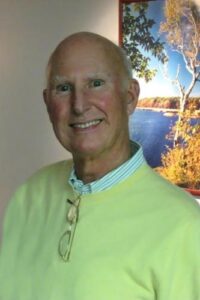
Robert F. Ritchie Faculty
Dr. Robert F. Ritchie of Freeport died peacefully on October 5, 2025.
His life was defined by service, scientific discovery, and a deep commitment to advancing human health.
In 1950, he enlisted in the U.S. Navy, serving as an electronics technician. After his discharge in 1954, he pursued undergraduate studies at Cornell University and earned his medical degree from the University of Rochester in 1960. He completed his residency at Tufts New England Medical Center and a post-graduate fellowship at the Robert B. and Peter B. Brigham hospitals in Boston, where he balanced clinical practice and research in rheumatic diseases.
In 1965, Dr. Ritchie moved to Portland, ME, becoming the first fellowship-trained arthritis specialist to provide expertise within the state as a rheumatology consultant. He served as the Director of the Rheumatic Disease Laboratory at the Maine Medical Center for twelve years. In 1969, his efforts to automate nephelometry — a method for analyzing body fluid proteins-revolutionized clinical laboratories worldwide and remains a standard today.
Dr. Ritchie’s collaboration with Dr. Chester A. Alper from the Blood Grouping Laboratory in Boston, MA led to the founding of Atlantic Antibodies, which became a global leader in producing high-quality antisera for diagnostic testing. By 1972, he applied a new method known as immunofixation to identify tumor-producing proteins. At the same time, he developed computer algorithms to generate patient-centered laboratory reports-an innovation conceived long before the advent of electronic medical records.
By 1973, Dr. Ritchie’s research activities and passion for discovery had grown and assumed many of the characteristics of an independent research organization, and so, the creation of the Foundation for Blood Research, a 501(c)3 nonprofit organization was established. In 1974, other medical research colleagues joined him and the collective synergy propelled the organization for decades in furthering the identification, management, and prevention of human disease through clinical and laboratory investigation.
Under Dr. Ritchie’s leadership as Medical Director and President/CEO from 1978 to 2007, he led a group of talented scientists, physicians, analysts and educators in partnering relationships with organizations such as Maine Medical Center, the University of Southern Maine, the Centers for Disease Control, the National Institutes of Health including the National Institute for Child Health and Human Development, the New England Regional Genetics Group, and the Department of Environmental and Preventive Medicine at the University of London.
Dr. Ritchie’s expertise earned him advisory roles with the World Health Organization Plasma Protein Standards Committee, the Food and Drug Administration Immunology Panel, the College of American Pathologists Immunology Resource Committee and the International Federation of Clinical Chemistry Committee on Plasma Proteins. His efforts helped forge a European/U.S. alliance that served as a model for future, similar joint projects.
Over his five-decade career, Dr. Ritchie served on nine editorial boards, authored or co-authored more than one hundred forty scientific papers, and contributed to six books on nephelometry and serum protein analysis. He held academic appointments at Tufts University, the University of Vermont, Bowdoin College, and the University of Southern Maine, and served on the boards of Westbrook College, Bigelow Laboratories for Ocean Sciences, and the Bigelow Foundation.
He was the recipient of the Maine Medical Association Distinguished Service Award (1997) and the Hanley Leadership Award (2007).
Beyond medicine, his passions included travel, geology and mineralogy. He was a founding board member and trustee of the Maine Mineral and Gem Museum in Bethel, ME. He wrote what many consider a first of its kind book on the science and art of sphere-cutting. He donated a collection of more than eight hundred spheres along with his equipment to further the education program there. In 2022, he was recognized by the museum with the establishment of the Robert F. Ritchie Lapidary Studio.
Dr. Ritchie’s legacy lives on through the institutions he shaped, the innovations he pioneered, and the lives he touched. His brilliance, curiosity, and generosity will be remembered with deep admiration and gratitude.
He is survived by his wife of forty years, Anne Weathers Ritchie, of Freeport and four daughters and their families: Janine Dutton, Michelle Ritchie-Haddow, Annette Ritchie