
Steven G, Meister ’58 died on September 7, 2026, in Audubon, Pennsylvania.
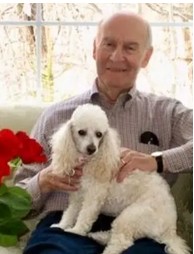
Dr. Steven G. Meister ’58
(The following was provided by the Cobble Hill Chapels on September 7, 2026: )
Dr. Steven Gerard Meister, 88, of Audubon, PA, passed away peacefully on September 7, 2026, of complications from heart failure— six days shy of his 89th birthday, surrounded by his loving family.
Steven was born on September 13, 1937, in Boston, MA, to Harry and Edith Meister. He grew up in Dover, NH, and was the first in his immediate family to go on to higher education. He earned his BA from Bowdoin College in 1958 and his MD from Tufts University School of Medicine in 1962, launching a career that would keep him in hospitals, labs, and lecture halls for the better part of five decades.
He did his post-graduate training in cardiology as an intern at Indiana University Medical Center, after which he served his country in the United States Army from 1963 to 1965. He did his residency at the Boston Veterans Hospital, followed by fellowships at Boston City Hospital, Peter Bent Brigham Hospital, Tufts University, and Harvard University.
He went on to serve as assistant professor of medicine in the Departments of Medicine at the University of Pennsylvania and the Medical College of Pennsylvania (MCP), later becoming professor of medicine at MCP, and in 1979 he became chief of cardiology at MCP (now merged with Hahnemann Hospital). During his time at MCP, he served as director of the cardiac catheterization lab, educating and supervising multiple successions of cardiac fellows. He retired from medicine in October of 2011.
Steven’s many revolutionary research and clinical accomplishments in the field of cardiology have improved the lives of countless patients and will continue to affect the work of medical students and cardiologists for generations to come. In 1972, through his landmark medical research, he demonstrated that paradoxical embolism—a specific cause of ischemic stroke—was not a rare anomaly but a common, treatable condition that could easily be diagnosed during a patient’s life. Early in his career, he pioneered “the bedside catheter,” which could be placed via a balloon-tipped tube inserted into the femoral vein in the leg–much faster in an emergency and eliminating the need for heavy x-ray equipment. In 1978 he wrote a groundbreaking article about the use of nitroglycerin ointment for long-term treatment for outpatients living with congestive heart failure and was the first to show that nitroglycerin could be administered through patches on the skin. He co-authored another landmark paper in that same year, “R-on-T Phenomenon and Arrhythmias,” that dramatically shifted long-held beliefs about the danger of arrhythmia. His research on pulmonary angiography directly shaped the modern clinical approach to diagnosing a pulmonary embolism. Most importantly, he and a colleague discovered the cause of symptoms commonly preceding a heart attack, leading to a very effective change in treatment that has saved many lives.
Over the course of his career, he was a proud member of the International Society for Cardiovascular Pharmacotherapy, the American Federation for Clinical Research, the American Heart Association, the American College of Cardiology, the American College of Physicians, and the Pennsylvania Cardiology Society, of which he was vice president from 1984-86. He was a subject of Who’s Who in America in the forty-first edition, in 1980-1981.
Away from the hospital, Steven was an avid student of history and a lifelong reader. In retirement, he devoured biographies and nonfiction. In younger years he loved to ski with his children, played the occasional round of golf, fished casually, and could be talked into “tinkling the ivories” now and then. He was also a gifted stick figure cartoonist, delighting his young girls with humorous panels depicting everyday life. He was the loving father over the years of family dogs Susie, Polly, Heather, Tyler, and Cassie, as well as Missy the cat. He followed the lives of his children and grandchildren with unflagging interest. As a scientist and as a nature lover, Steven was gravely concerned about climate change and supported many organizations working to protect planet health. He instilled both daughters with a love of the outdoors and a commitment to environmental health.
He is survived by his wife of sixty years, Carol R. Meister; two daughters, Laura Ilise Meister, Elizabeth Lee Meister and her wife, Erin Kelly; four grandchildren, Izzy Kelly, Finn Kelly, Amelia Kelly, and Adeline Meister; and his cousin, Louise Pinard. He was preceded in death by his father, Harry Meister, his mother, Edith Meister and her second husband, John Springer.
Those who knew Steve will remember a man of sharp intellect, a wry sense of humor, and an enduring curiosity about the world and the people in it — a doctor who spent his life caring for hearts, a husband, father and grandfather who spent was generous with his own. He will be so deeply missed by all who knew him.